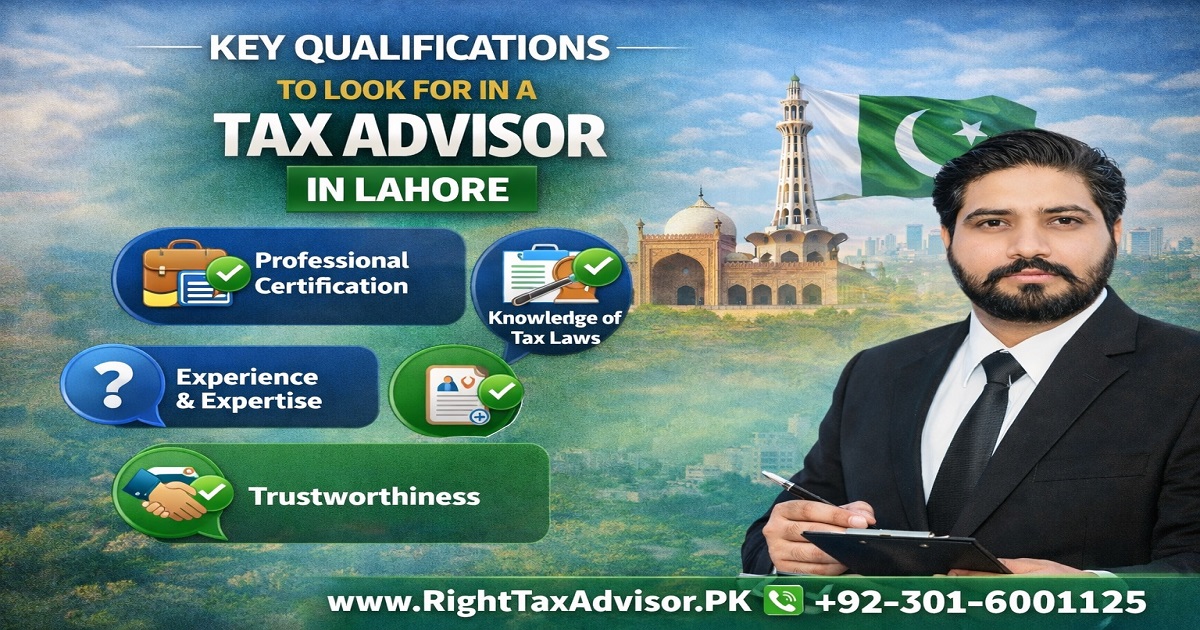
Formal training, special tax qualifications and practical experience must be combined with the local tax laws and the Federal Board of Revenue (FBR) mechanisms by a qualified tax advisor in Lahore. The major qualifications are a good academic background- a bachelor or masters degree in accounting, finance, or business management.
It is important to consider when selecting a tax advisor in Lahore, those individuals who are aware of the various tax laws in the country and are registered by the appropriate regulatory authorities. The tax landscape in Lahore is now becoming more digital, thus experience in the IRIS system of the Federal Board of Revenue is necessary. The following are the main qualifications that one will seek in a tax advisor in Lahore:
Getting the correct tax advisor is also important so that your finances are well managed and in the right way. Your consultant can make or break it whether you are required to do personal tax filing or corporate tax planning. In Lahore, there are some important traits that distinguish a trusted advisor. In this guide, the researcher will discuss the best attributes to consider when recruiting a tax professional at Lahore.
Key Qualifications to Look for in a Tax Advisor in Lahore
Choose an advisor that is qualified and experienced in your case. Pay attention to:
Active License
Ensure the advisor has an active and valid license issued by the authorities. This makes them sure that they are accepted professionals who adhere to the local requirements and maintain abreast with the tax law developments.
Experience with FBR Matters
An effective advisor will possess the experience in dealing with Federal Board of Revenue (FBR). They are able to deal with filings correctly, and respond to audits or notifications, and keep you in order.
Experience with Business Taxation
The business owners require a person who is knowledgeable in corporate filings, sales tax compliance and tax-efficient strategies. The advisor is supposed to be aware of the different forms of business taxes and assist in reducing taxes.
Knowledge of Income Tax Ordinance 2001
It requires in-depth knowledge of the 2001 Ordinance. The basis of the taxation system in Pakistan, a well-informed advisor will be able to make sure that everything will be done properly.
Sales Tax Act Expertise
In case your business involves sales tax, the advisor needs to familiarize himself with Sales Tax Act and assist you to claim exemptions or deductions.
Practical Litigation Experience
A tax litigation attorney will come in handy in a dispute or an appeal case. They must act on your behalf in the courts of law and give legal advice.
Transparent Fee Structure
Select an advisor who will give you all the fees initially. The hidden fees or prices which may create problems in the future should be avoided.
Physical Office in Lahore
The fact that an office is located in Gulberg, DHA, or Johar Town implies that you can go there in person and consult on any issue, and you have a local office contact whenever you require some help.
Having such qualifications, you may be sure that your tax issues will be professionally and efficiently managed.
Certification and Proper Credentials
A qualified tax consultant is credible. Find licensing by any of the well-known organizations like the Institute of Chartered Accountants of Pakistan (ICAP) or consultants registered by FBR. The certification ensures that the advisor has passed the necessary standards and he/she has experience in dealing with complex tax issues.
Why Certification Matters
Certified professionals remain abreast with the new laws and regulations, which are accurate and compliant. Their qualifications ensure that they reduce the risks of liabilities and prevent expensive errors.
An advisor is able to help in planning, filing, and compliance. As an individual or a business, effective tax management is only possible with the employment of a professional who has certification.
Professional Certifications For Trustworthy Tax Advisor
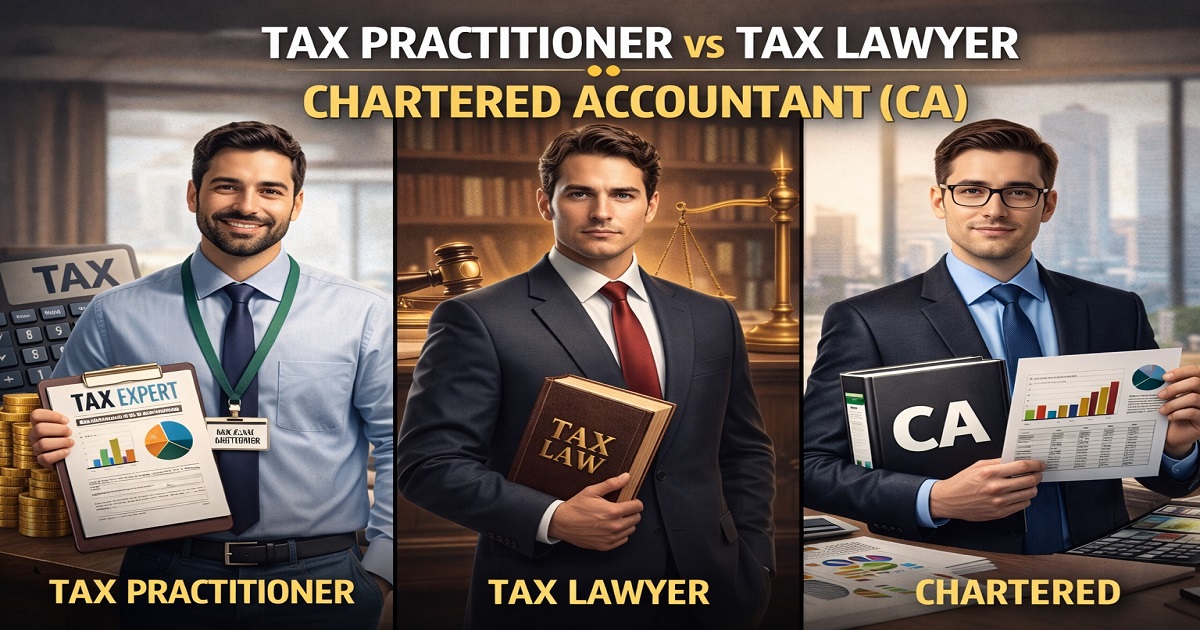
Certified Tax Advisor (CTA)
highest qualification in Pakistan and provided by Institute of Corporate and taxation (ICT) or Institute of Taxation. Includes corporate tax, income and sales and offers courses specialized towards professionals in Lahore.
Chartered Accountant (ACA/FCA) or Cost and Management Accountant (ACMA/FCMA): members of ICAP or ICMAP, they usually come with good tax knowledge.
Income Tax Practitioner (ITP)
Registered on the Federal Board of Revenue (FBR) under the rule 86 of the income tax rule 2002.
ACCA or CIMA: used in Pakistan and introduce tax skills.
Technical Knowledge and Experience in Best Tax Advisor
FBR Compliance: extensive understanding of the Income Tax Ordinance 2001 and Sales Tax Act 1990.
Digital Proficiency: can access the FBR portal based on IRIS 2.0 to e-file, e-pay and e-sign.
Audit Representation: has represented clients in audit or appeal cases with the tax authorities.
Knowledge in Industry: is familiar with international tax standards and has experience in the industry in an IT, manufacturing, and real estate sector.
Essential Skills for Licensed Tax Preparer
The tax preparers also submit returns on behalf of individuals and businesses according to the rules of the state and federal governments. They are also useful in assisting clients to reap all their benefits. In order to accomplish this, they gather and assess all pertinent information, handle the returns, and counsel the clients on the further actions.
- Logical and reasoning capabilities.
- Clarity in communication to clarify complicated tax issues.
- Strong ethics and honesty.
- Minimum Experience: 3-4 years of work involving tax, usually senior positions.
Top 10 Best Certifications and Qualifications of Tax Consultants
In order to be a successful tax consultant, one should obtain correct qualifications. Such credentials are confirmations of experience, enhance credibility, and career openings.
1. Certified Public Accountant (CPA)
- Summary: CPA certification is one of the most recognized in the accounting and tax profession particularly in the U.S.
- Why It Matters: CPAs are able to offer tax services, auditing financial statements, and accounting consultations, and it is a testament to advanced competence in principles and tax law.
- Eligibility: The candidate must possess a bachelor degree in accounting or any other related course, CPA exam, and state-specific licensing regulations.
2. Chartered Tax Advisor (CTA)
- Overview: The CTA, which is provided by organizations, including the CIOT in the UK, is tax planning and tax law oriented.
- Why It Matters: It is considered to be one of the top qualifications of tax consultancy and one that indicates a profound knowledge of tax law and advisory.
- Conditions: Success of certain training programs and examinations by CIOT.
3. Enrolled Agent (EA)
- Overview: EA designation is issued by the IRS and is permitted to represent oneself before the agency.
- Why It Matters: EAs are able to process audits, appeals, collections, and even offer tax advice, and therefore they are best suited in the dispute resolution job positions.
- Qualifications: Passing Special Enrollment Examination (SEE) and fulfil the IRS continuing education requirements.
4. Certified Management Accountant (CMA)
- Overview: CMA is an international management accounting certification provided by the IMA.
- Why It Matters: CMAs have good financial analysis, budgeting and reporting knowledge that are useful in advising corporations on tax planning.
- Eligibility: A bachelors degree and passing of CMA examination which is more about financial management, strategy, and reporting.
5. Chartered Financial Analyst (CFA)
- Summary: CFA designation is a title that is granted by CFA Institute and it focuses on investment analysis and management.
- Why It Matters: The CFA is not tax specific but can be helpful to consultants who work with investment planning, tax consequences of investments, or those who advise clients with high net worth.
- Qualifications: Bachelor of degree, completion of three levels of CFA exams and work experience.
6. Master of Science in Taxation (MST)
- Overview MST is a high-level degree that expands the understanding of tax laws, tax strategies, and tax planning.
- Why It Matters: It prepares experts to deal with intricate tax matters and offer tax planning.
- Eligibility: Bachelor of degree is necessary; preferably in accounting or finance and a graduate degree course in taxation.
7. Certified Financial Planner (CFP)
- Overview: CFP certification is oriented to holistic financial planning, which includes tax issues.
- Why It Matters: It equips the consultants to counsel on taxes, investments, estate planning, and retirement plans on the holistic needs of clients.
- Eligibility: Bachelor of degree, CFP exams and financial planning experience.
8. Tax Preparer Certification
- Summary Tax preparers are certified to prepare individual returns in certain areas.
- Why It Matters: This qualification is appropriate to those specializing in the preparation of returns of individuals or small based businesses without advanced advisory services.
- Higher education: Varies by region or nation; typically, it encompasses the taking of a training course and the passing of an exam.
9. Certified Fraud Examiner (CFE)
- Overview: The CFE is an ACFE-awarded certification in the field of fraud detection and prevention.
- Importance/Significance: This is vital to consultants engaged in forensic accounting or investigating financial fraud, particularly tax-fraud.
- Conditions: Bachelors degree, work experience and CFE examination.
10. International Taxation Certification
- Overview: Certifications awarded by organizations including the ICAEW are a source of expertise in the cross-border taxation matters.
- Reason to Why It Matters: Consultants experienced in international tax laws, transfer pricing, VAT and cross borders strategies are required by global firms.
- Requirements: Depends upon the program, most programs include course work and exams regarding international tax.
Experience in Handling Your Specific Tax Needs
Experience is key. One either requires personal filing or corporate services, an expert advisor offers personalized, strategic advice. Look for:
What Experience to Look for
A history of proper income tax returns and knowledge of deductions of individuals.
To individuals in the business, knowledge on corporate taxes, VAT and business-based needs.
Hands on experience of local legal and regulatory provisions on strategic advice that minimises liabilities.
The expert will work you through difficult matters and will help you maximize your tax scenario.
Good Reputation and Client Testimonials
Reputation matters. A trusted advisor has gained the trust of a client and he or she provides quality services. Review online, social media and tax forums. Request referrals and seek testimonials or case studies that can be used to show that they can handle various situations.
How to Check a Tax Professional’s Reputation
A knowledgeable advisor breaks down the complicated tax issues in a simple language and responds to your questions. Communication will ensure that you do not get confused and make mistakes in your filings.
Strong Communication Skills
Tax laws change frequently. An advisor with updated knowledge about the policies and national regulations of Lahore will be able to present compliant strategies, evade fines, and take advantage of emerging opportunities.
Open Pricing and Fee Modeling
Request a broken down fee prior to signage. Know whether the advisor is charging on a fixed rate or hourly basis. Ability to have clear pricing creates trust and avoids any surprises.
Personalized Tax Solutions
Every client is unique. An effective advisor tailors the remedies to your financial objectives, either maximizing deductions to yourself or developing a tax-efficient business organization.
Skill to offer Long-Term Tax Planning
In addition to the filings, an advisor is expected to assist you in future planning: retirement savings, tax-efficient investments, and future liability preparation. The long-term planning minimizes tax liability in the future and maximizes the deductions and credits.
Enhancing Availability: Continuous Support
Tax matters arise all year. A trusted consultant provides 360 days of service on income fluctuations, re-structuring, new legislation, audit or mega dealings. Regular availability of professional counseling will ensure that you remain proactive and prevent the expensive errors.
Ethical Practices and Integrity
Select an advisor that is honest, transparent and compliant. Search for disclosure regarding charges and extent of services, and evade cheap cuts that can affect integrity of filing. Ethical professionals support the most appropriate strategies to you not only out of their profit.
Conclusion
The selection of the appropriate tax advisor in Lahore is critical to the effective and legal management of taxes. Seek certification, experience, reputation, effective communication, current knowledge, clear pricing, tailored solution, long-term planning, support throughout the year, and high ethical standards. Your consultant needs to possess these qualities and not compromise.
FAQs Section
What are the most important qualities to look for in a tax advisor in Lahore?
The certification, the experience, the reputation, the skills in communication, and the current knowledge of the tax laws.
How do I find a reliable tax consultant in Lahore?
Referral seek, online reviews, and certification and experience verification.
What is the cost of hiring a tax advisor in Lahore?
Experience and complexity make costs different. Pricing transparency is the key.
Can a tax professional help me with long-term tax planning?
Yes, a good advisor will provide long-term plans on how to reduce liabilities and guarantee financial security.
What can I do to determine if a tax professional is honest or not?
Search candor, sincere counsel and escapism.